
From mid-infrared gas sensing to femtosecond fluorescence — what an instrument needs from its light source, Fingerprint region, linewidth matching, difference-frequency generation, ultrafast pulses — and integrating them into instruments.
The trace of methane on someone's breath. Anaesthetic gas lingering in an operating theatre. Carbon dioxide drifting in an incubator. All of it can be measured with a beam of light — no sample drawn, no reagent consumed, an answer in seconds. Provided the beam lands on the right wavelength.
This article is about the light source in instruments like those: why the mid-infrared is unavoidable, how that wavelength is actually made, and why fluorescence work wants femtosecond pulses. The physics is the same as in telecom. The criteria are not.
1. The molecular fingerprint region
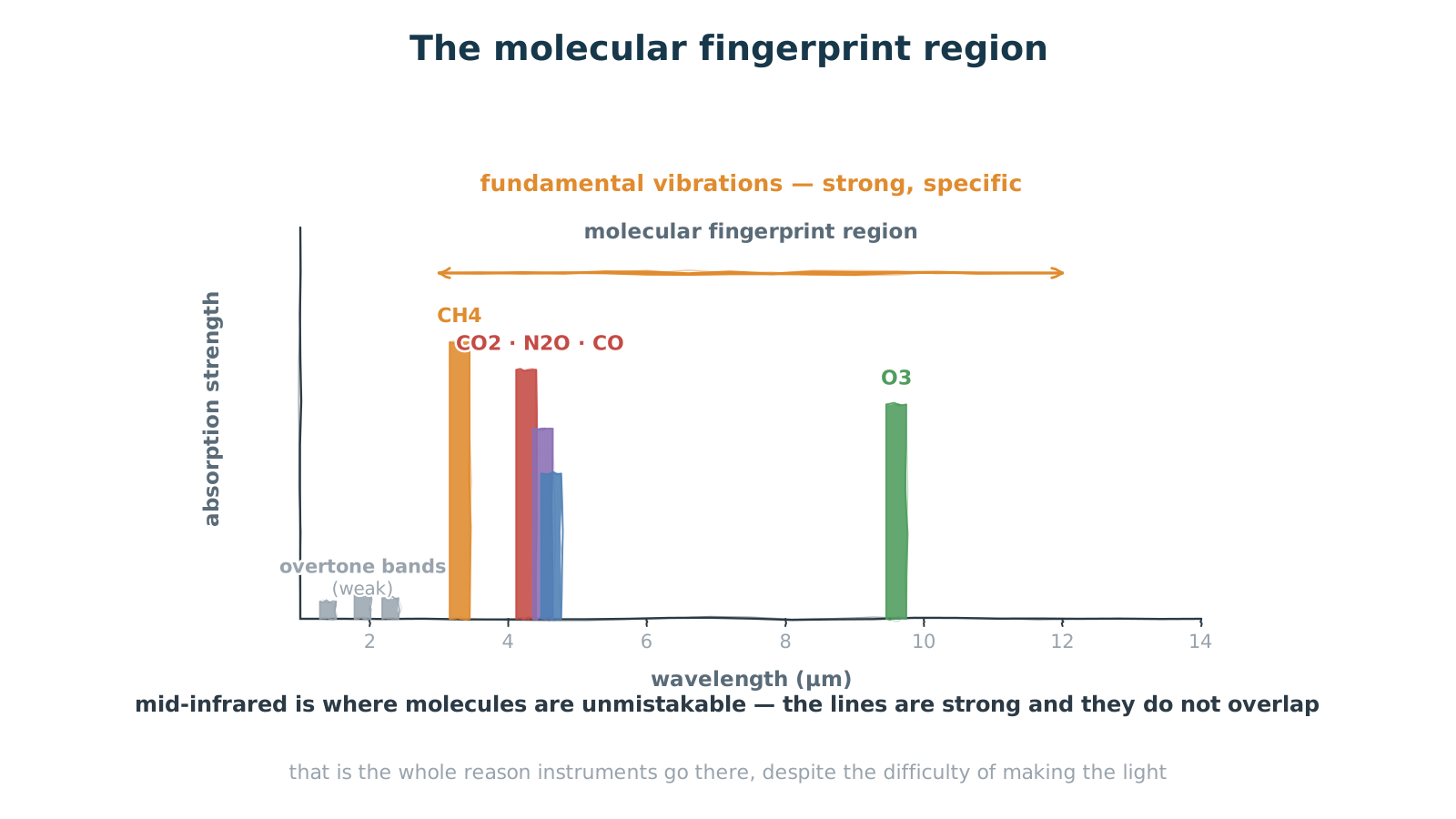
Figure 1 — The molecular fingerprint region: fundamentals are strong and specific
near-infrared carries only weak overtones; the fundamentals live in the mid-infrared
Molecules absorb light selectively: a photon is taken up only when its energy matches some vibrational or rotational level spacing. Where those absorption lines fall along the wavelength axis is fixed by molecular structure — hence the name, the fingerprint region.
The thing that matters is fundamentals versus overtones. Most fundamental vibrations sit between 3 and 12 microns, in the mid-infrared. There the absorption is strong, the lines are well separated, and different molecules do not overlap — methane near 3.3 microns, carbon dioxide at 4.26, nitrous oxide at 4.5, carbon monoxide at 4.6, each on its own.
What the near-infrared offers, from 1 to 2.5 microns, is only overtones — weak transitions near integer multiples of the fundamentals, typically one to two orders of magnitude weaker. Two orders of magnitude down in absorption is two orders of magnitude worse in detection limit, which rules out trace gas analysis.
So the choice is not really a choice. Parts-per-billion gas measurement means going to the mid-infrared. The price is that this is the hardest stretch of spectrum to generate: no mature mid-infrared laser, and expensive detectors.
2. Narrower than the line
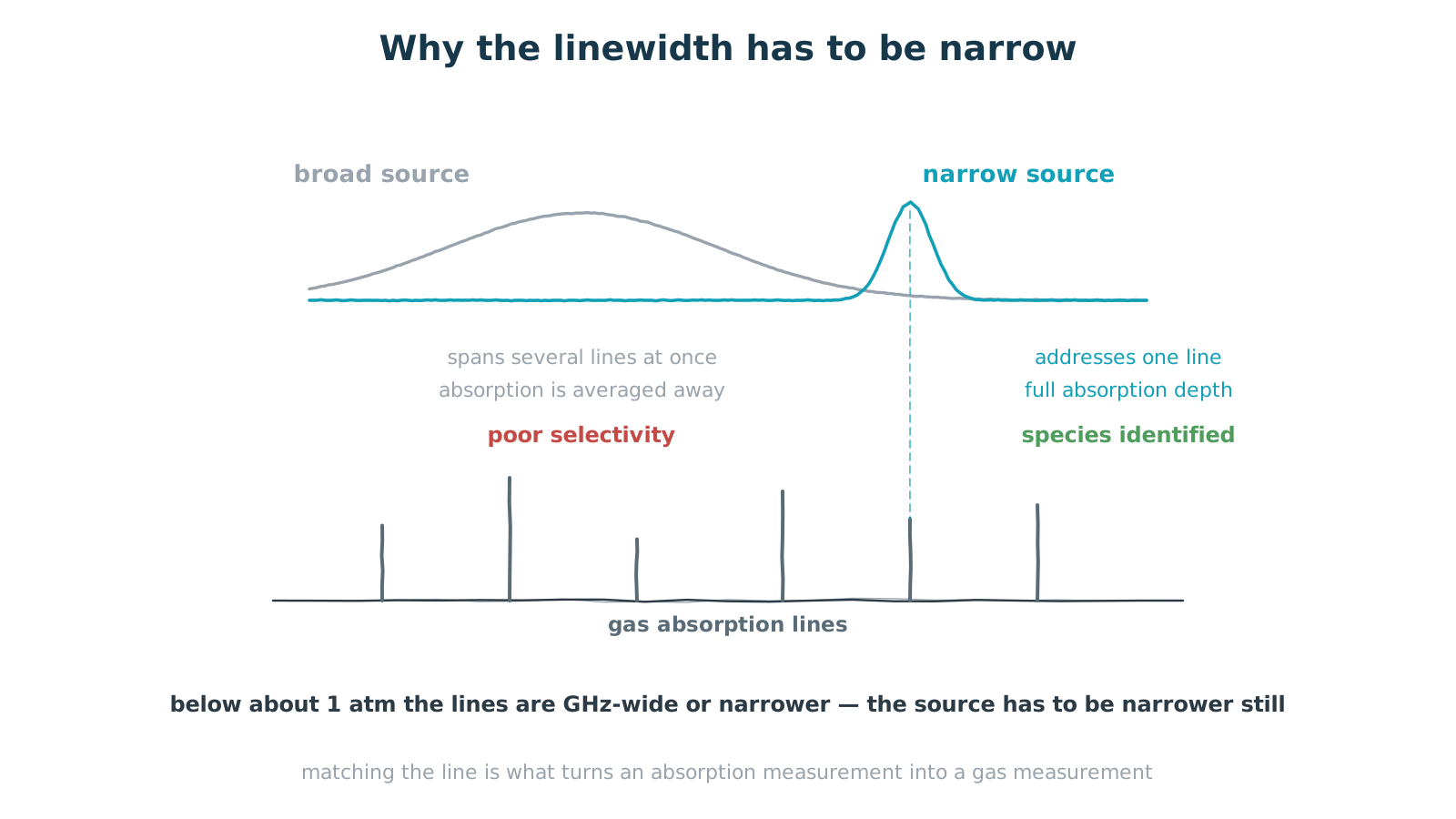
Figure 2 — Why the source has to be narrower than the line
a broad source averages across lines and measures nothing in particular
Reaching the mid-infrared is not sufficient either. The linewidth has to be narrow enough as well.
The reason is that absorption lines have width of their own. Near atmospheric pressure, collision broadening puts it in the gigahertz range; reduce the pressure or use a modulation technique and it narrows to tens of megahertz or below. If the source is broader than the line, it covers several at once and returns their average — the absorption is diluted, the concentration comes out wrong, and worse, you cannot tell which gas you are looking at.
When the source is much narrower than the line, by contrast, it can be stepped across them one at a time: park it on the methane line and you read methane, move it to the carbon dioxide line and you read carbon dioxide. The full absorption depth is preserved and sensitivity is at its best.
That is why gas spectroscopy sources are engineered for linewidth rather than raw power. A high-power source with a broad line is useless here.
3. Getting there: difference frequency
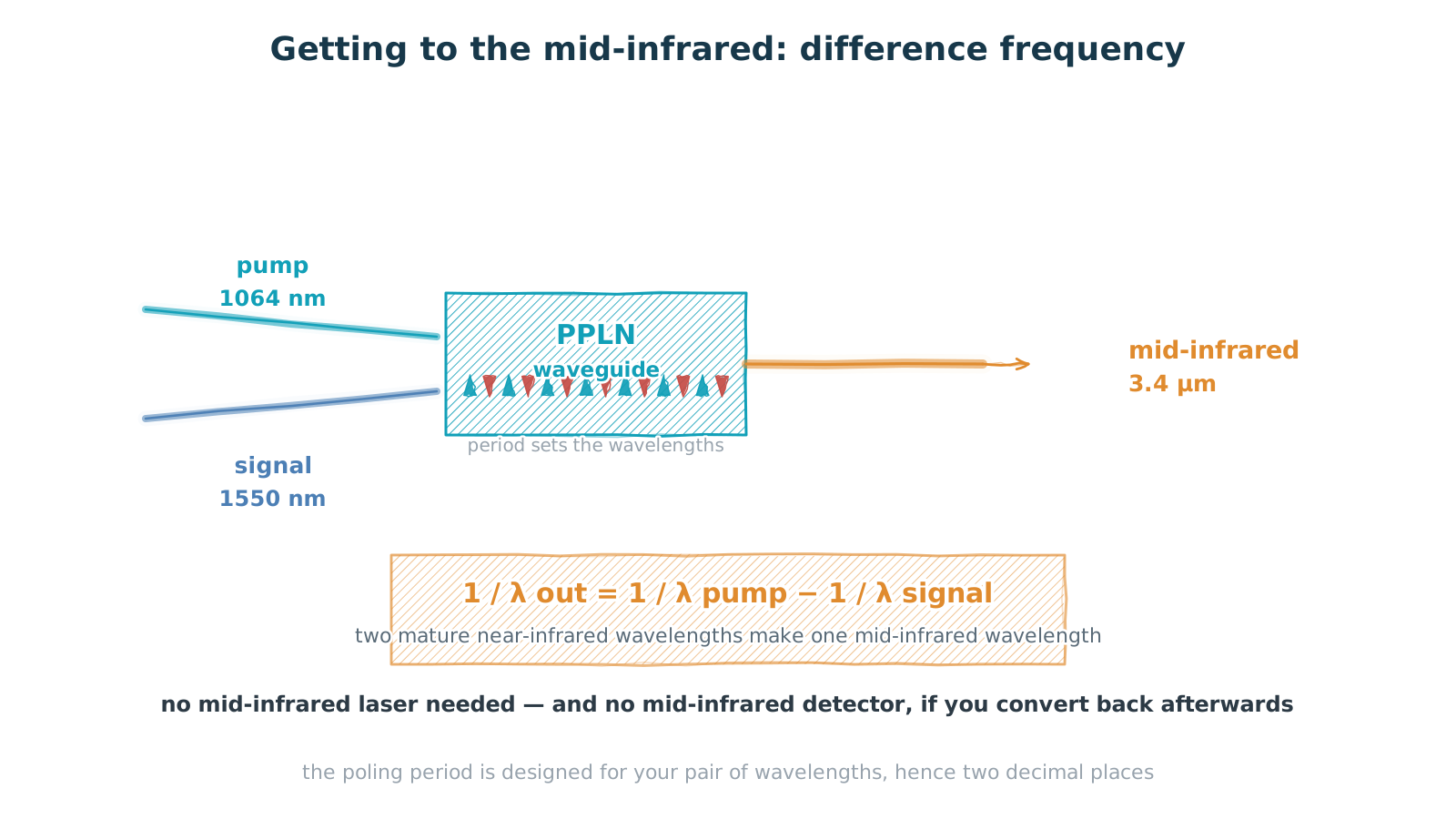
Figure 3 — Difference frequency: two mature near-infrared wavelengths for one mid-infrared
the period is computed for your pair of wavelengths — hence two decimal places
With no mature mid-infrared laser available, the answer is to make the wavelength — through difference frequency generation (DFG) in a nonlinear crystal.
The principle is energy conservation written another way: two waves interact in a periodically poled lithium niobate (PPLN) waveguide and the output photon carries the difference of their frequencies, so 1/λ out = 1/λ pump − 1/λ signal. A 1064 nm pump with a 1550 nm signal lands near 3.4 microns — squarely in the fingerprint region.
The elegance is that both ends are mature. 1064 nm and 1550 nm are the best-established wavelengths in industrial and communications lasers: reliable, inexpensive, available with plenty of power. Two mature near-infrared wavelengths buy one mid-infrared wavelength for which no mature laser exists. Phase matching is handled by periodic poling — the period is computed for your specific pair and built into the chip.
What if you need methane at 3.3 microns? Change the pump or the signal wavelength and recompute the period. That is precisely why these modules are custom parts: specifying pump and target wavelengths to two decimal places on the order is not bureaucracy — those two numbers determine what period gets fabricated.
Worth adding that these modules are not only for the mid-infrared. The same process also generates visible and near-infrared light, just through different interactions — second-harmonic and sum-frequency generation. Which process you use depends on which band the light has to reach.
4. Ultrafast pulses: high peak, low average
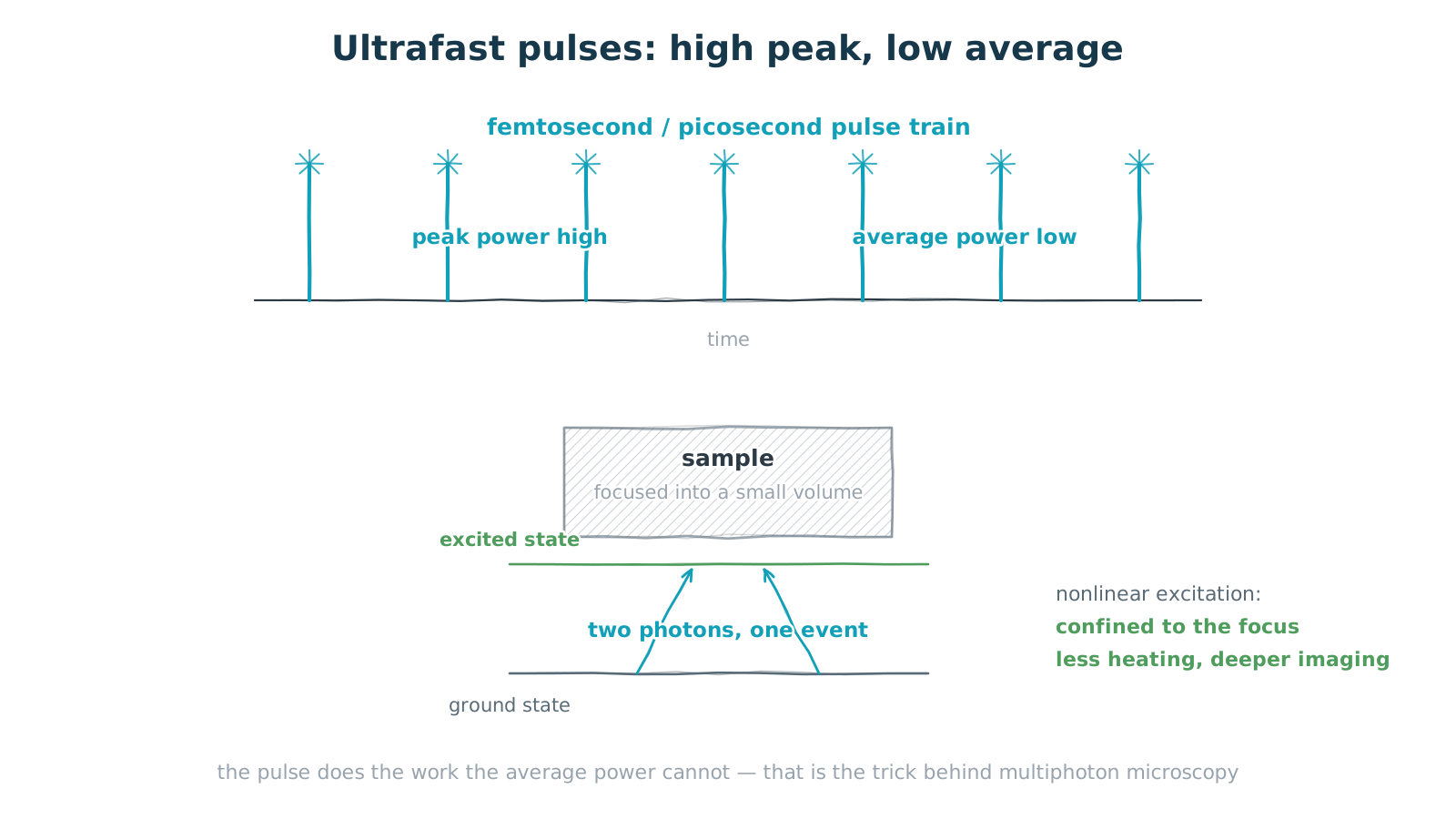
Figure 4 — Ultrafast pulses: high peak power, low average power
two-photon excitation happens only at the focus: less heating, deeper imaging
On the fluorescence side the requirements are entirely different. Multiphoton microscopy relies on two or more photons being absorbed at once — a nonlinear process that only becomes appreciable at very high instantaneous intensity.
Pulses are therefore the point. Compress the same average power into femtosecond or picosecond pulses and the peak power rises by orders of magnitude while the average power — the thermal load the sample actually experiences — stays put. Reaching that peak with continuous light would mean an average power high enough to cook the specimen.
There is a second benefit. Two-photon excitation happens only at the focus. Away from it the intensity is too low: no excitation, no fluorescence. That gives optical sectioning for free, with no confocal pinhole, and leaves everything outside the focal volume essentially unexposed — less phototoxicity, less bleaching, and deeper imaging.
So what a fluorescence source has to deliver is ultrafast pulses at a specific wavelength: the wavelength set by the fluorophore's excitation spectrum, the pulse width set by nonlinear efficiency. Which is why these sources are commonly built to a particular wavelength rather than bought as a broadly tunable box.
5. From module to instrument
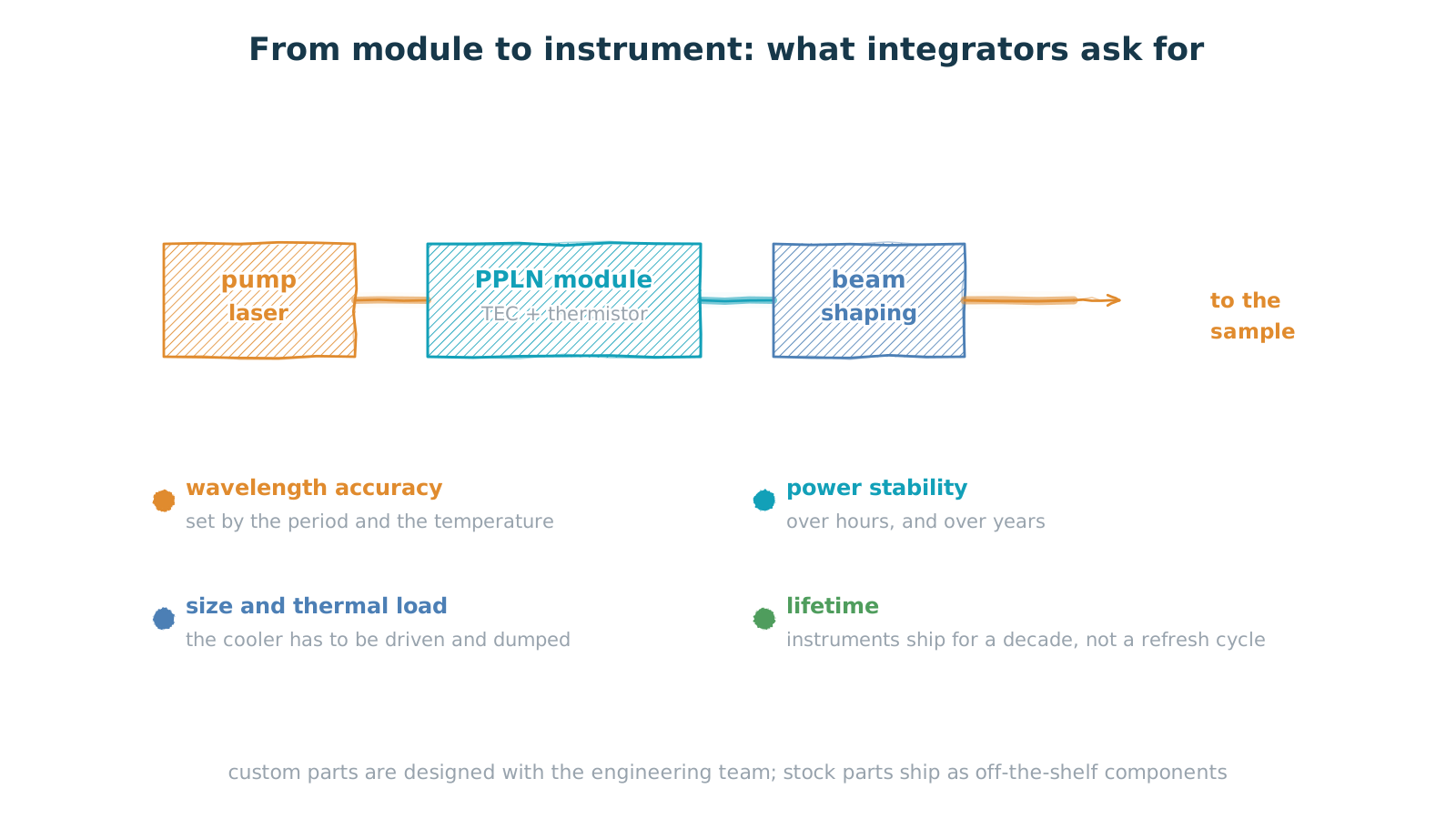
Figure 5 — From module to instrument: the four questions integrators ask
wavelength accuracy, power stability, size and thermal load, lifetime
Making the device is half the job. Fitting it into an instrument is the other half, and the considerations there differ sharply from telecom.
Wavelength accuracy — set by the poling period together with temperature. The period cannot be changed once fabricated, so temperature is the only trim left, which is why the module carries a thermoelectric cooler and a thermistor inside. Not to keep the chip cool, but to hold the wavelength exactly where you want it.
Power stability — instruments run for hours at a time and for years in total. Short-term stability sets the signal-to-noise ratio of a single measurement; long-term stability decides whether recalibration is needed. This usually draws more attention than peak power.
Size and thermal load — the cooler needs drive electronics and its heat needs somewhere to go. Trivial on a bench, decisive in a portable or endoscopic device.
Lifetime — the item most often underestimated by people from a data-centre background. Datacom products turn over every two or three years; medical and scientific instruments are expected to serve for a decade or more, without a light source swap in the middle. Reliability qualification is on a different scale entirely.
Those requirements shape how the business works. Standard parts cover the volumes where specifications converge; unusual wavelengths and unusual packaging go custom, with specifications worked out alongside the engineering team, while a range of stock items stays available as off-the-shelf components. Both routes coexist — a pattern quite unlike the telecom side.
6. What to ask when specifying
Pulling that together, these are the questions worth asking when you need a spectroscopy source module.
Target wavelength — which absorption line, or which fluorophore's excitation peak, to two decimal places. Linewidth — how much narrower than the target line, and whether the measurement is at atmospheric or reduced pressure. Power and stability — how much average power, and what short-term and long-term stability. Process — second harmonic, sum frequency or difference frequency; what pump wavelength, and is a pump already available. Packaging and lifetime — volume, thermal conditions, expected service years.
One more question that is easy to skip and saves a great deal of work: has this module already been integrated into a comparable system? Qualification cycles for spectroscopic instruments are long, and a part with field history removes most of the reliability work — modules of this kind are indeed already running inside a number of existing systems.
Closing
Communications and spectroscopy run on the same physics: second-order nonlinearity in a periodically poled lithium niobate waveguide. The criteria are almost inverted, though. Communications asks about picojoules per bit and how fast it can go; spectroscopy asks whether the wavelength is right, whether the power holds, and how long it will last.
The industrial shape differs too. Communications ships a handful of specifications in enormous volume. Spectroscopy ships many wavelengths, none of them in large numbers. Which makes this field naturally high-mix, low-volume, where custom is the rule rather than the exception — the poling period computed once for your pair of wavelengths, the module tuned once for your absorption line.
That is perhaps the most interesting thing about the sector. It does not drive cost down through scale the way communications does. It creates value by getting each individual wavelength right.
Communications asks how much information a beam can carry. Spectroscopy asks what molecule a beam can identify. Same device, two entirely different sets of criteria.