Products
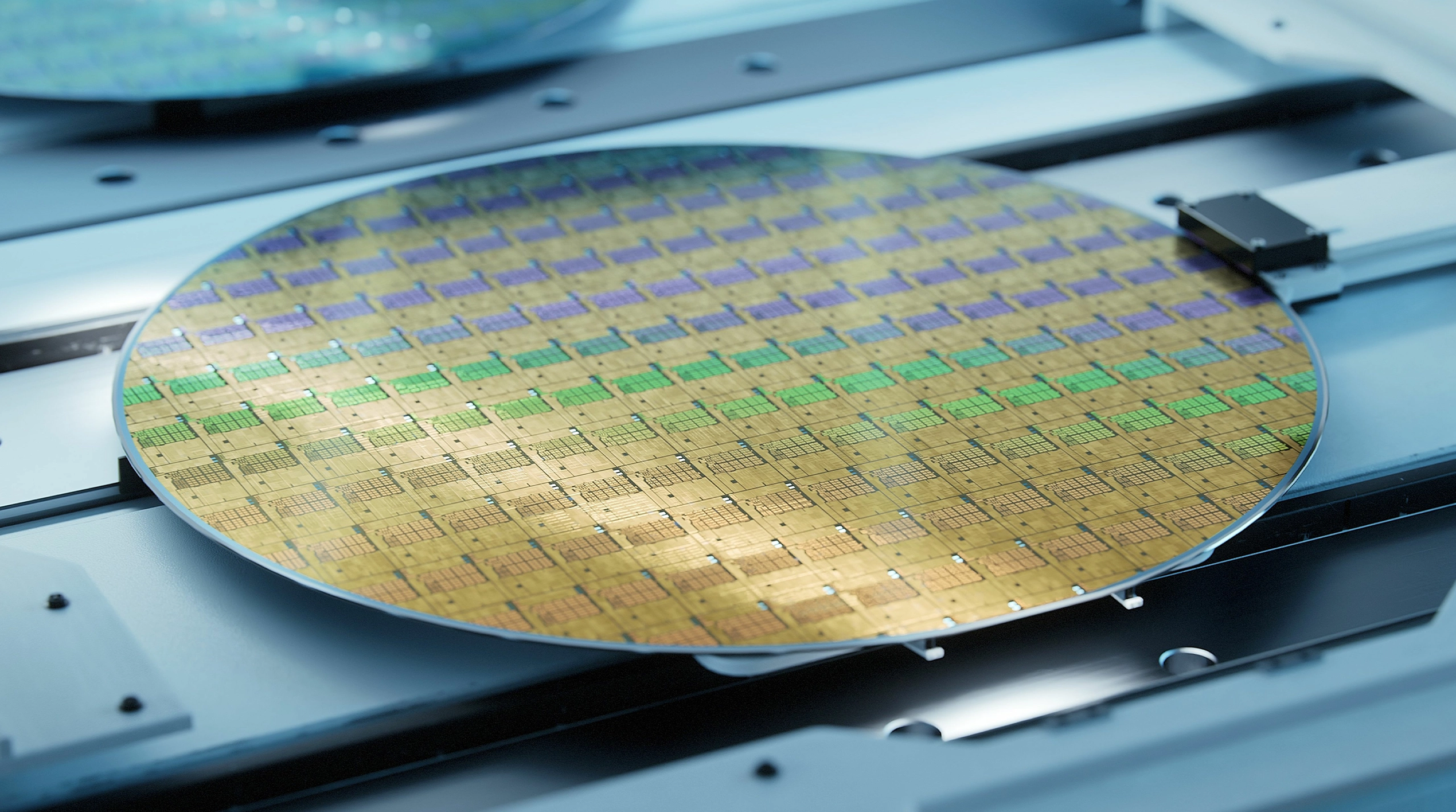
Known-good-dies (KGD) on the TFLN Technology platform are ideal for PAM/IMDD and coherent applications.
Power Next-Gen Photon Technology with Liniobate.
Products
Known-good-dies (KGD) on the TFLN Technology platform are ideal for PAM/IMDD and coherent applications.
Applications
Liniobate's TFLN Technology platform enables products and solutions across AI, Datacom, Telecom and beyond.
Our Low-Noise Lithium Niobate Quantum Frequency Converter efficiently transforms communication-band photons to visible wavelengths, to be detected by cost-effective, highly efficient Si APD's. With custom-designed wavelength separation to filter out background noises due to second harmonic generation and Raman scattering, our SHG780/SHG532 module ensures high conversion efficiency and low background noise, vital to preserve signal quantum properties for long-distance quantum communication, networking, and sensing.
We work with partners worldwide to integrate our crystals and waveguides into a range of scientific instrumentation.
For OEM products you can discuss your desired specification with our engineering team to facilitate the design of a custom item. We also have a wide selection of readily available stock items for use as off-the-shelf components in your system.
We design and manufacture PPLN products that can be used in many spectroscopic or environmental science applications. These include narrow-linewidth laser sources for gas spectroscopy applications or picosecond and femtosecond ultrafast laser sources for specific wavelengths in fluorescence spectroscopy. Our products are already successfully integrated into a number of existing systems enabling future research and development into novel applications.
High-performance electro-optic IQ modulator based on Thin-film lithium niobate (TFLN) technology. It is ideal for applications where space and weight are at a premium: e.g. QPSK and QAM encoding up to 60Gbd, single-sideband modulation or RF mixing up to 60GHz. This linear Dual Parallel Mach Zehnder device combines market leading performance in bandwidth and drive-power with a compact folded-optics configuration, which segregates RF and optical interfacing to opposing ends and helps to maintain integrity of the RF feeds.
Microwave photonics is currently used in a wide variety of applications. It enables new microwave functions such as fast spectrum analysis, low-phase-noise microwave and millimeter wave generation, high-frequency conversion, long true-time delay, probing and control of microwave devices and ultra-fast analog-to-digital converters. Conversely, microwave techniques enable new optical communication systems, with faster modulation and detection devices.
Data Center, Telecom Applications
Liniobate has achieved a low-cost coherent transceiver by densely integrating its proprietary broadband and compact Thin Film LiNbO3 (TF-LN) modulator and silicon photonics receiver into the CFP2. By taking advantage of the excellent transmission performance and low-loss characteristics of the TF-LN modulator, this product delivers high output power and high OSNR performance, enabling up to a 15% increase in transmission distance compared to previous generation products.Liniobate will continue to develop its technology to aim at next-generation 1.6Tbps pluggable coherent transceivers.
News
Here you'll find the latest company announcements, industry insights, and expert perspectives. Dive into our stories to see how we're driving innovation and shaping the future.
Photodetector Technology Landscape: From Classical Photoelectric Effect to Single‑Photon Detection
Photodetectors are semiconductor devices that convert optical signals into electrical signals—the eyes of every optoelectronic system. As counterparts to lasers, they are indispensable in optical communications, sensing, computing, and many other fields.
Semiconductor Laser Linewidth and Coherence: Principles, Measurement, and Applications
Spectral linewidth is the key metric for monochromaticity and determines performance in coherent communications, interferometric sensing, and LiDAR. Narrower linewidth means longer coherence length, enabling better phase preservation over long distances. For FP lasers, understanding linewidth behavior is crucial: they typically exhibit a broad multi-longitudinal-mode spectrum (2-5 nm), which can actually be advantageous in low-coherence applications such as broadband sources for WDM-PON.
Semiconductor Laser Array Technology and Multi-Channel Parallel Light Sources
As optical communication evolves toward 100G, 400G and even 800G, the bandwidth limitation of single-channel lasers becomes increasingly critical. Parallel transmission - sending and receiving data through multiple channels simultaneously - has become the core strategy to overcome bandwidth constraints.
PARTNERSHIPS
Partner With Us
We believe the best ideas come from collaboration. Whether you're a potential distributor, technology provider, or complementary brand, let's explore the possibilities.
Learn More About Our Solutions